By Kate Bove
Although we’re only halfway through the year, Eva Victor’s self-starring directorial debut, Sorry, Baby, has cemented its place as the film to watch as awards season nears.
After debuting at Sundance, where Victor picked up the Waldo Salt Screenwriting Award, an eight-million-dollar bidding war between the likes of Mubi, Neon, and others landed the indie dramedy with A24. Sorry, Baby is produced by Barry Jenkins (Moonlight), who mentored Victory through the process, and co-stars always-great performers Naomi Ackie (Mickey 17) and Lucas Hedges (Lady Bird). But beyond its early accolades and notable names, Sorry, Baby isn’t just a great movie, it’s a remarkable one.
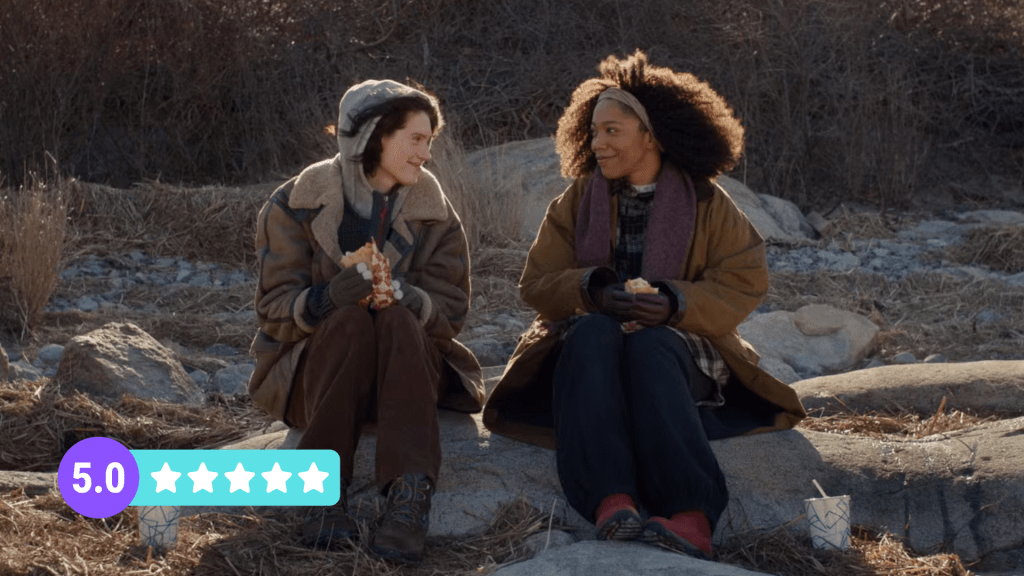
The film opens in a deceptively cozy way: Lydie (Ackie), ventures from New York City to small-town Massachusetts to visit her best friend, Agnes (Victor), who’s a literature professor at their alma mater. On the surface, it’s all very Nancy Meyers-in-Ipswich, complete with cozy sweaters and brisk walks and laughing under flannel blankets. But it’s also clear that something’s off. Lydie, who has grown and changed quite a bit since college, hesitantly points out that Agnes not only works at their former haunt, but lives in the same drafty house.
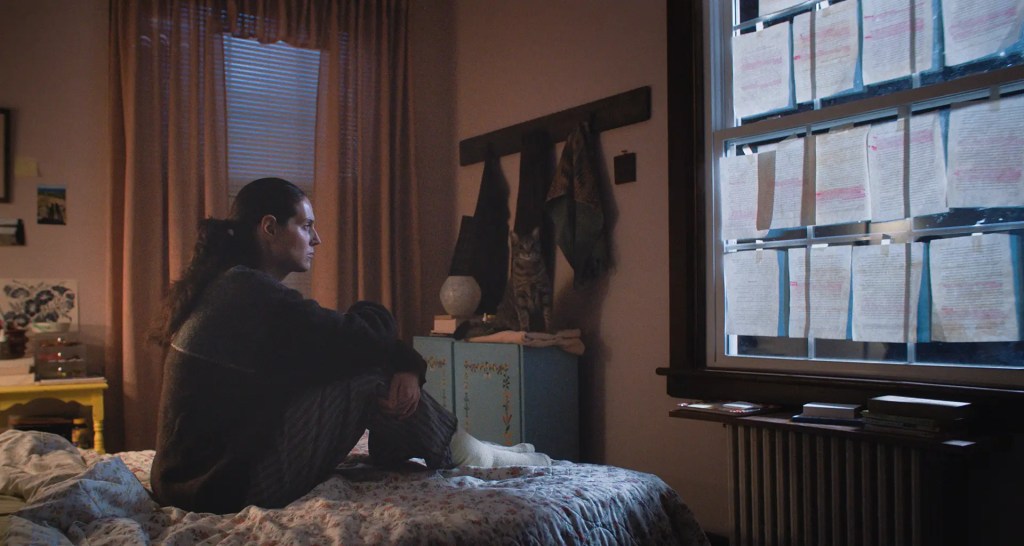
Slowly but assuredly, Sorry, Baby shows the nearly imperceptible cracks in Agnes’ carefully curated life. For starters, she doesn’t really leave the house much, except to attend classes. Conveniently, she’s hooking up with her neighbor, Gavin (Hedges), who lives just beyond a stand of trees. And, once Lydie leaves again, Agnes checks her locks several times before feeling okay enough to sleep alone.
Before departing, Lydie shares that she’s pregnant. Agnes is thrilled for Lydie, but there’s a touch of sadness, or something like it, just beneath every joke and laugh. It’s late fall in Massachusetts — the blank, grey, whittled-away moment before winter breaks over the landscape. And that’s when Sorry, Baby shifts back to Agnes and Lydie’s college days.
Victor never quite clarifies how much time passes between sections — a purposeful move that puts us, rather deftly, in Agnes’ headspace. We learn that a professor Agnes trusted, Decker (Louis Cancelmi), sexually assaulted her one night. That’s the unseen thing that’s lingering in the room with Agnes (and Lydie) in the present and post-college sections of the film. Like the movie’s sense of time, healing isn’t linear. The smallest gesture or choice of word makes the violence sear fresh again.
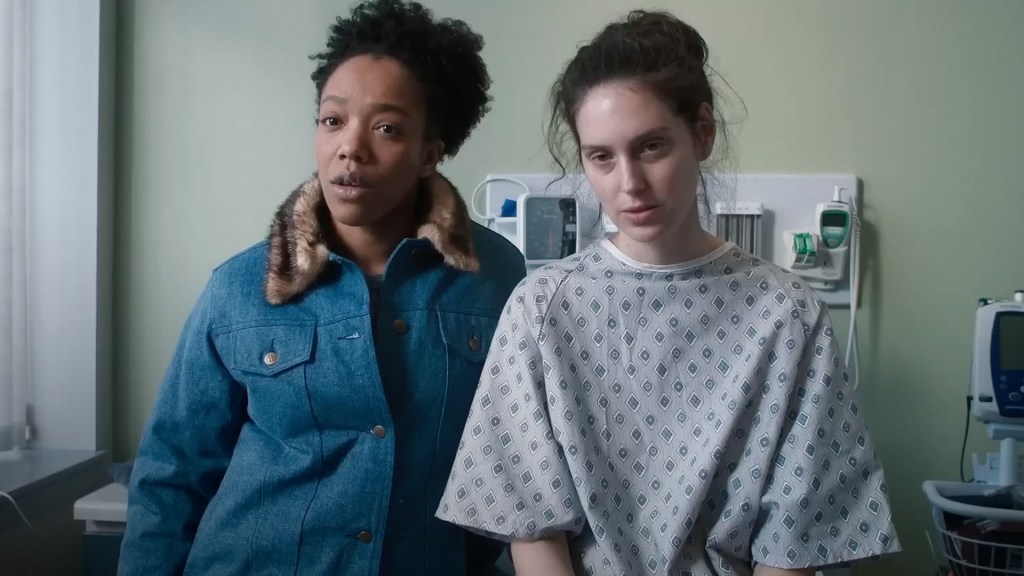
Unlike other filmmakers, Eva Victor makes a very intentional choice to imply the violence instead of showing it. When Agnes enters Decker’s house in the evening, the camera remains outside, watching the house as the light changes — both inside and outside. At a distance, we assume what’s happened, especially when Agnes leaves wordlessly and drives home to Lydie, but we don’t actually know what happened until Agnes recounts it in her own words to her best friend.
Eva Victor’s bold filmmaking choices restore Agnes’ agency — and that’s what makes Sorry, Baby a more satisfying and resonant survivor film than any revenge-fantasy movie. While a logline might dwell on Agnes’ attempts to recover and live her life after being assaulted, Victor’s film is more interested in examining the friendship that sustains Agnes. In that sense, there’s a lived-in sort of hopefulness to Sorry, Baby. Even when there’s a setback, Agnes can still share a laugh with Lydie and feel okay.
While Ackie and Victor’s chemistry stands out, Sorry, Baby is anchored all around by its strong ensemble. In one surprisingly poignant scene, Agnes tells a stranger, Pete (John Carroll Lynch), how she’s really feeling in the wake of the assault. He coaches her through a panic attack, makes her a sandwich, and really listens. But, most importantly for Agnes, he remains a stranger, which allows her to have a moment of genuine reprieve.
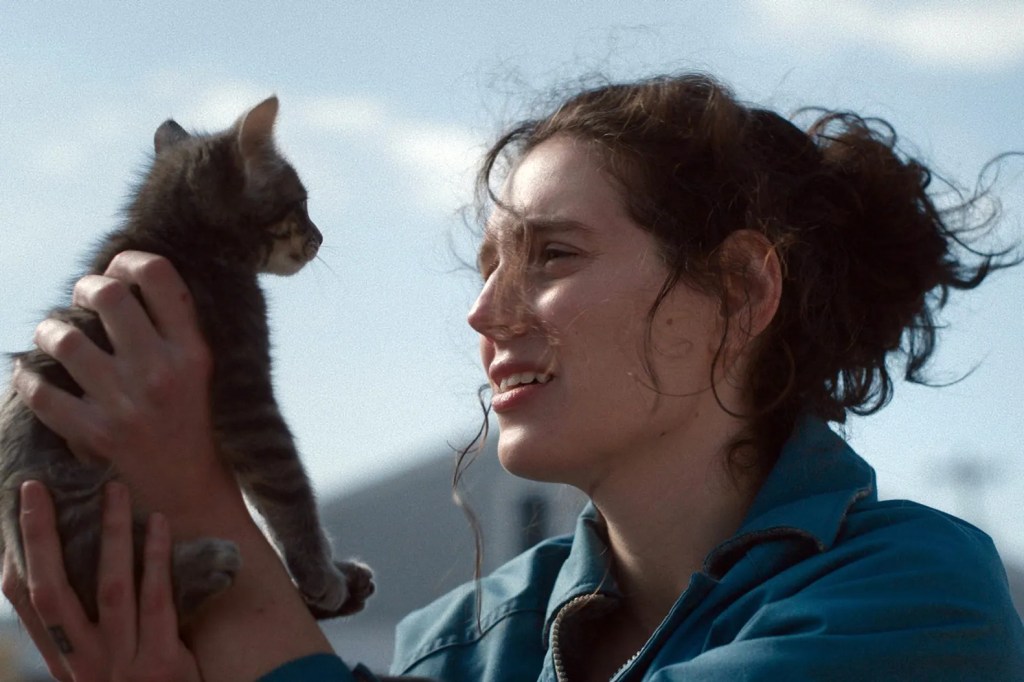
A dark comedy-meets-drama, Sorry, Baby is incredibly funny in both wry and laugh-out-loud ways. Beautifully restrained and keenly observed, writer-director-star Eva Victor’s debut feature is about the strange, myriad, and simultaneous ways we grieve, love, resent, and, against the odds, live. Without ever veering into the sentimental, Sorry, Baby affirms that even in the wake of terrible moments, we can always find profound, sustaining intimacy with our friends, pets, companions, and selves.
RATING: 5 out of 5 stars
 wrap notes